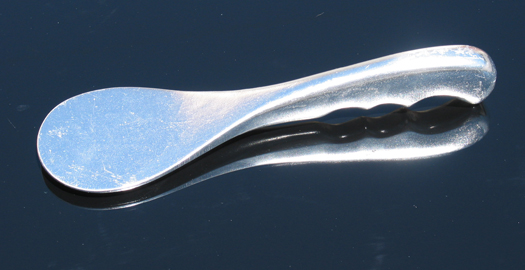
You can buy The Original Whackerspoon here
I was introduced to Abalone by a neighbor in Hermosa Beach where I grew up. Mr. Gudmundsson found a nice spot blanketed with the tasty mollusk off California’s Palos Verdes, called Haggerty’s. It is also known as “Paddle Board Cove,” and a favorite for local surfers. It has a rugged entry, with difficult-to-scale cliffs to a rocky beach. It requires strength and skill to launch into the Ocean from the sharp, barnacle-covered rocks.
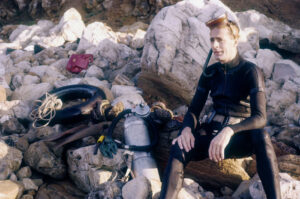
His son, Harald, was a few years older than me. He introduced me to diving. Harald had a driver’s license and owned a VW Bug, so we ventured to Paddle Board Cove.
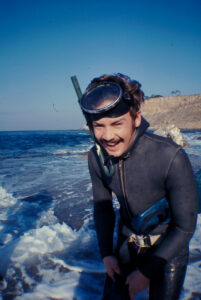
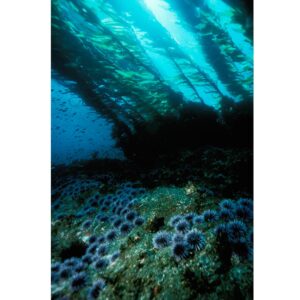
After the struggle of climbing over clumps of mussels and barnacles, the sound of sea life became music to my ears. The water was cold, and the sea floor was carpeted with purple urchins. Sunlight filtered down through the kelp forest.
Finding red Abalone was challenging at first. They tend to hang out under rock ledges and in hard-to-reach places. The tool for removing them was called an Ab Iron. It doubled as a measurement gauge to meet game laws. I tried to pull one big Ab off, and it clamped down so tight on the rock; Houdini would have been proud.
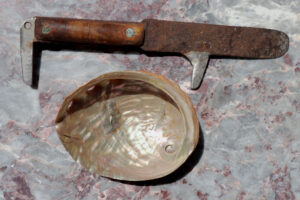
My mother, Betty Evans was the food editor for our local newspaper, “Easy Reader.” Mr. Gudmundsson knew she loved abalone and would harvest and deliver a few in a wet burlap bag. Betty used a wooden rice paddle to shuck the meat from its colorful shell and tossed the unappetizing intestines in the yard compost bin. Fish guts make great compost for the garden.
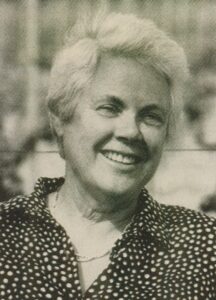
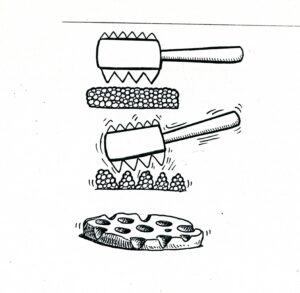
Abalone meat includes a slimy foot. It is as slippery as a wet bar of soap. Betty wore a cloth glove to hold it while cutting againt the grain. Abalone slices should be thin 1/8-1/4 inch thick. You need a super sharp knife. The end of the foot is dark and too tough to pound tender. It was reserved for an abalone soup. She then used a large wooden mallet to pound the meat until it felt limp rather than springy. Many cooks use a serrated metal mallet, but these medieval devices only chew the meat. The goal of pounding is to relax the muscle so you can enjoy the chew.
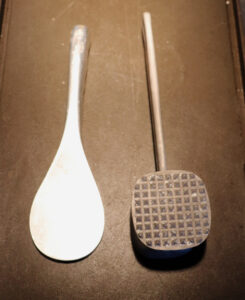
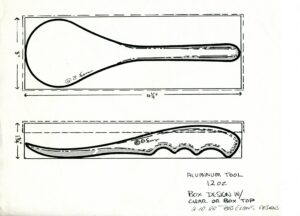
My artist friend John Iwerks, grandson of Ub Iwerks, the original animation artist who created Mickey Mouse, among other characters for Walt Disney, drew a simple comparison between the metal-spiked iron and a Whackerspoon.
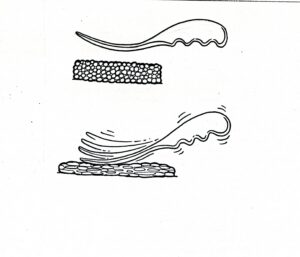
Next step – dredge the succulent meat in seasoned flour, an egg, then breadcrumbs. Now fry in an iron pan with hot butter for 20-60 seconds per side. Do not overcook, or you will return the meat to the consistency of shoe leather. Lay out on a napkin ir paper towel to absorb the excess butter/oil.
We used a Whackerspoon from my first production during our annual family trip to Yosemite for Christmas. We all sang songs to drown out the Whacks our Mother made while preparing the abalone we brought for dinner.
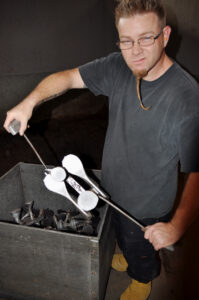
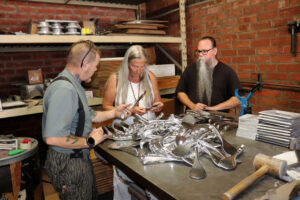
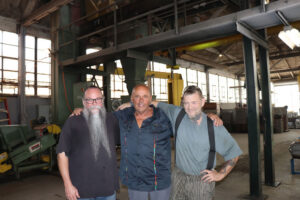
My grandfather, Victor Caliva, was our father’s stepdad. He established Aircraft Foundry in 1938. We still cast our food-safe aluminum Whackerspoons there today. My grandmother, Maureen Caliva, always had a lunch ready for me when I visited the family Foundry.
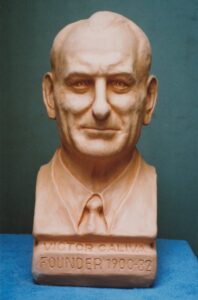
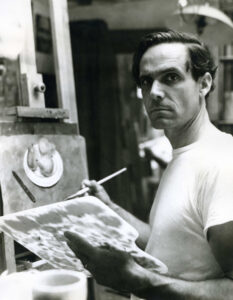
My father, Gordon B. Evans, was an Artist. He was introduced to the sculpting process while working in the foundry in High School.
He drew these pictures from there when he was around 16 years old.
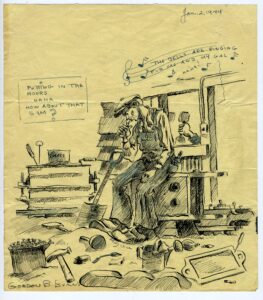
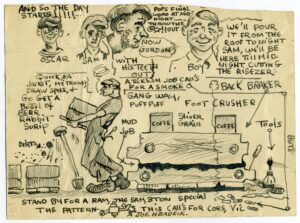
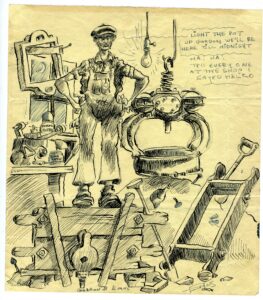
Watching the foundry crew pour liquid aluminum into customers’ molds in the 1970s gave me the idea for the “Abalone Plucker and Pounder.”
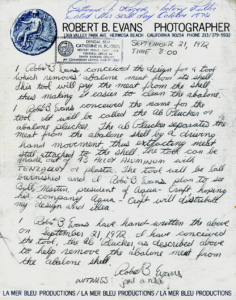
My father guided me using the lost-wax method. I shaped the design in beeswax, which was wrapped with plaster of Paris. When we heated the mold in my father’s kiln, the wax melted away, leaving a perfectly shaped cavity in which to cast a lead part. From this a production mold was made at the Foundry. Their motto is “Let us take your concept from an idea to production”
Trident Products distributed the Abalone Plucker and Pounder to dive shops, then burgeoning along the West Coast.
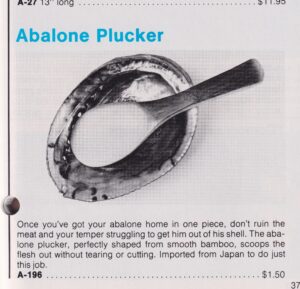
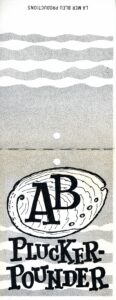
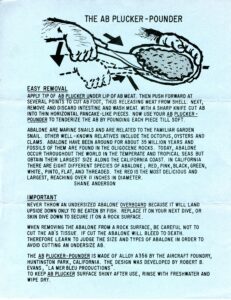 Then we were picke dup by a high-end Palos Verdes cooking store, which expanded sales for use pounding or whacking chicken and steak, and for more than just Abalone.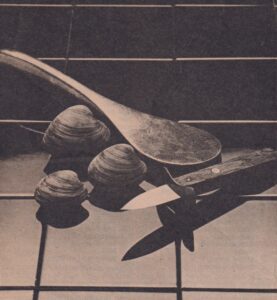
Harald taught me how to harvest abalone. I watched as he used his ab iron to pry a few Abs from under a rocky ledge. That was the lesson. We were free-diving until I finished my SCUBA lessons at Dive N Surf. The Gudmundssons introduced me to this pioneering SCUBA source. It was owned by twin brothers, Bob and Bill Meistrell.
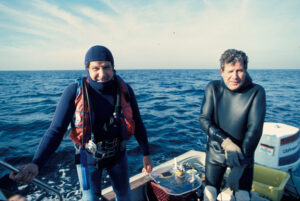
Bob was County of Los Angeles Scuba Instructor Number One. He taught me to dive and I was hired on to fill air tanks, paint boats, wash wetsuits, and clean the store. They were also the founders of Bodyglove. Even wearing this revolutionary gear, the cold water and sloshing waves of Paddle Board Cove were exhausting.
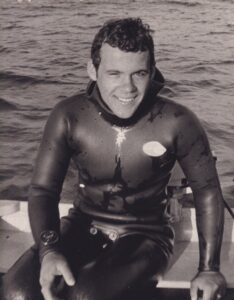
Carrying burlap bags full of our abalone allocation, wearing scuba tanks and our heavy lead-weighted belts, we nicknamed the rocky cliff “Cardiac Hill,”.
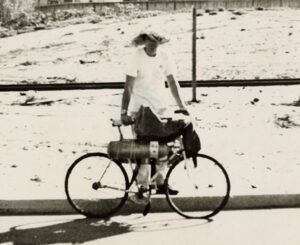
Harald was drafted and wooshed off to Viet Nam. Without my mentor to drive, I had to bike with my dive gear from my parents’ home in Hermosa Beach to Dive ‘N Surf for work and Paddle Board Cove to dive for abalone.
The Meistrells had a special dive spot off Emerald Cove, Catalina Island, where, at 120 feet, we found a cache of large Abalone. Returning to their boat, “Que Paso,” I watched Bob use a rice paddle to shuck the meat from the shell. The flat shape of the wooden paddle ade the meat fly out when you didn’t strike it correctly. The rice paddle inspired the WhackerSpoon shape, but I decided to curve mine based on a ball-peen hammer. A curved shape provides control.
Bob’s wife Patti had butter melted in a hot iron frying pan ready. She would quickly dip the meat into beaten eggs and then lay both sides in bread crumbs. We would eat them as fast as she could flip them. Good smells and memories.
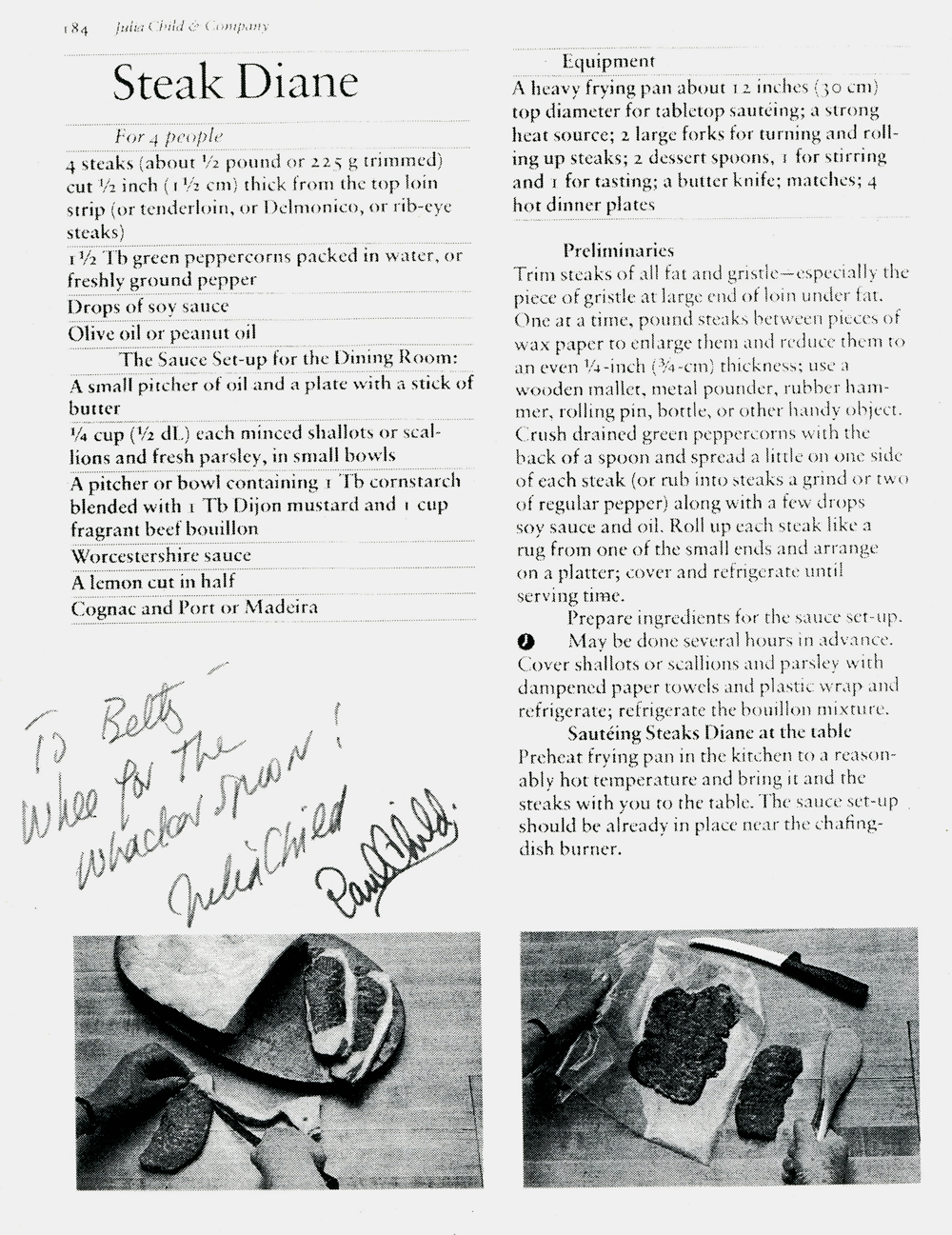
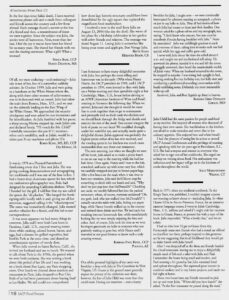
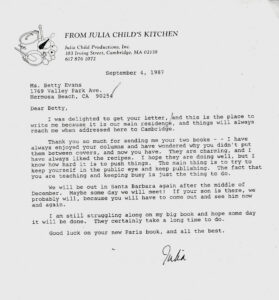
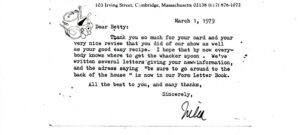
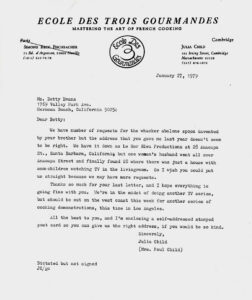
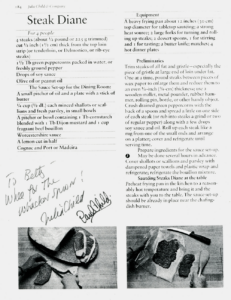
My mother met Julia Child at a fundraiser in the 1980’s. She and my father would visit with Julia and Paul Child, who lived in Montecito, California. On one visit, they gave her the Abalone Plucker and Pounder as a gift. Julia slapped it in her palm and proclaimed, “This isn’t an Abalone Plucker and Pounder, it is a “Whackerspoon.”
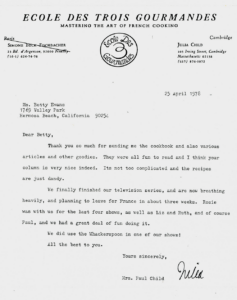
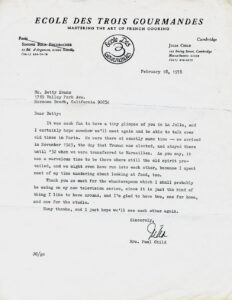
I found these wonderful friendship letters from Julia to my mom. They shared the common bond of living in Paris at the same time. Never met till years later. 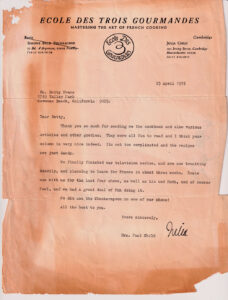
Today, the Whackerspoon is still manufactured in the Family Foundry by my Cousins Donald and Glenn Caliva.